Right of the accused to remain silent
The Collini CaseThe right of the accused to remain silent is both a procedural protection for Fabrizio Collini and a force that shapes the course of his trial. He invokes it from his first questioning onward, while Caspar Leinen must preserve his client’s choice without allowing silence to substitute for a defense. The novel’s courtroom drama turns on that tension: Collini’s refusal to explain is not itself evidence against him, yet it leaves the court and the people around him waiting to understand his motive.
The Right Explained
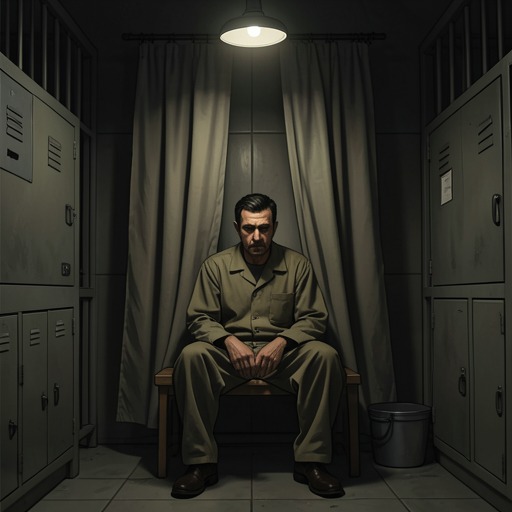
At the police interview, Collini is told that he may express his opinion of the charges, that saying nothing cannot be used against him, and that he may apply to have evidence heard, including by naming witnesses. He may also consult a lawyer at any time. Collini answers that he does not want to say anything. The distinction is made explicit: the choice to remain silent does not erase his other opportunities to participate in the proceedings, but neither does it oblige him to give an account.
The same protection is restated when the main hearing opens. The presiding judge tells Collini at length about his right to remain silent before asking whether he wishes to make a statement. Leinen answers for him that he does not want to make one at that time. When the judge asks what that timing means, Leinen says that they have not decided whether Collini will speak later. Asked directly, Collini confirms the answer with a nod. The exchange leaves open the possibility of a later statement without promising one.
Silence During Questioning
Collini’s silence is selective rather than a refusal to engage with every part of the case. During his police interrogation, he confesses to killing Hans Meyer and describes how he posed as a journalist to arrange an interview through Meyer’s secretary, entered the hotel suite, and killed him. He says that he bought the weapon at a flea market in Italy. But when the officers are ready to move from the circumstances of the killing to the question of motive, Leinen declares the interrogation over. The account of what happened therefore does not resolve why Collini acted.
Leinen has explained the possible sentencing consequence of a confession: a confession may be taken into account in passing a more lenient sentence, but that consideration does not apply to murder, for which the sentence is life imprisonment; in a manslaughter case, a confession could help. This advice places the choice to speak within the legal distinction between charges and potential sentences. It does not, however, supply Collini’s motive or cause him to explain it. His admission to the act and his continued refusal to discuss its reason remain separate facts.
The Choice in the Courtroom
The trial makes the silence public and formal. After the charge is read, Leinen tells the court that Collini does not wish to make a statement at that time. The presiding judge asks whether the defendant will speak later; Leinen says that they have not decided. Once the session ends, she speaks privately with Leinen, the prosecutor, and Richard Mattinger. She notes that the case is unusual: the victim was eighty-five, Collini was sixty-seven, he had no previous convictions and had led a blameless life, and lengthy investigations had found no motive. She warns the lawyers that she does not want surprises and asks them to disclose any plans for a plea or statement.
Leinen refuses to reveal more than Collini has chosen to say. He reminds the judge that his client has said he prefers to remain silent at that time, and asks whether she expects him to disclose how the defense will proceed. The exchange shows the practical pressure surrounding the right: the court wants to understand the shape of the case, while defense counsel cannot treat that expectation as permission to speak for his client beyond what the client has authorized. For the first five days, witnesses and experts testify, but the central question of motive remains unanswered.
Silence, Evidence, and the Defense
Collini’s choice does not prevent Leinen from presenting a defense. In his first major plea, Leinen reads slowly from what he has heard from Collini and what he has found in files in Ludwigsburg. He uses the language of law and evidence to recount the history behind the case. The courtroom’s understanding changes as the account gives context to what had initially appeared to be an unexplained killing. The scene marks a distinction between Collini’s personal silence and Leinen’s professional task: the defendant need not make a statement for the defense to bring relevant material before the court.
Later, Leinen asks Dr Sybille Schwan who laid charges against Hans Meyer. Schwan answers that it was Fabrizio Collini. The disclosure surprises the court; until then, no one had known this fact. When Richard Mattinger objects that the historical matter has nothing to do with the criminal proceedings, Leinen argues that it bears on motive and therefore on guilt. The presiding judge permits the question because motive may influence that issue. The court’s attention shifts from Collini’s silence to the evidence that can explain the context he has not personally narrated.
What Silence Leaves Open
After the new evidence, the court adjourns to consider the schedule. Collini and Leinen remain in the courtroom after it empties. Collini says that he does not think they have won and describes spending his days in his cell thinking about an Italian saying: the dead do not want revenge; only the living do. This is not a formal account of the motive that had been withheld, nor does it settle the trial. It is a rare personal remark, offered after prolonged silence, that makes clear how much the unresolved question weighs on him.
The right therefore has a double significance in the story. It protects Collini from being compelled to explain himself, while leaving the court to assess the case through testimony, records, and the defense’s presentation. His silence is neither treated as proof of guilt nor made equivalent to an absence of evidence. Instead, it governs who may speak, what can be disclosed, and when the trial’s account of the past begins to take shape.